

From Gibraltar to the Black Sea by F18: the incredible DEKOK adventure
Imagine setting out to sail several thousand kilometres on an open sports catamaran. No cabin. No bunk. No real shelter from the wind, cold or spray.
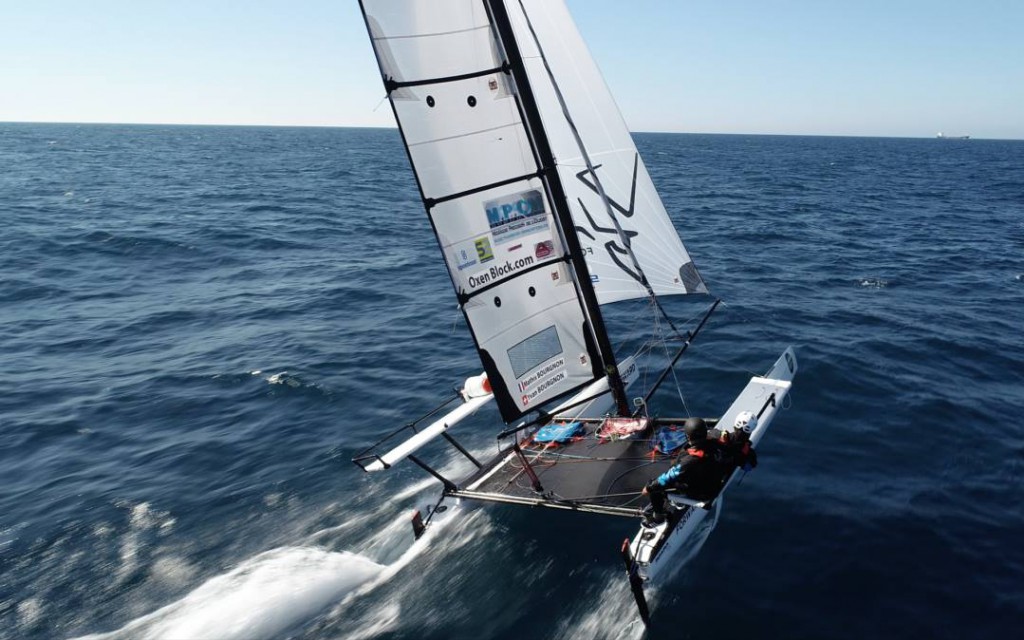
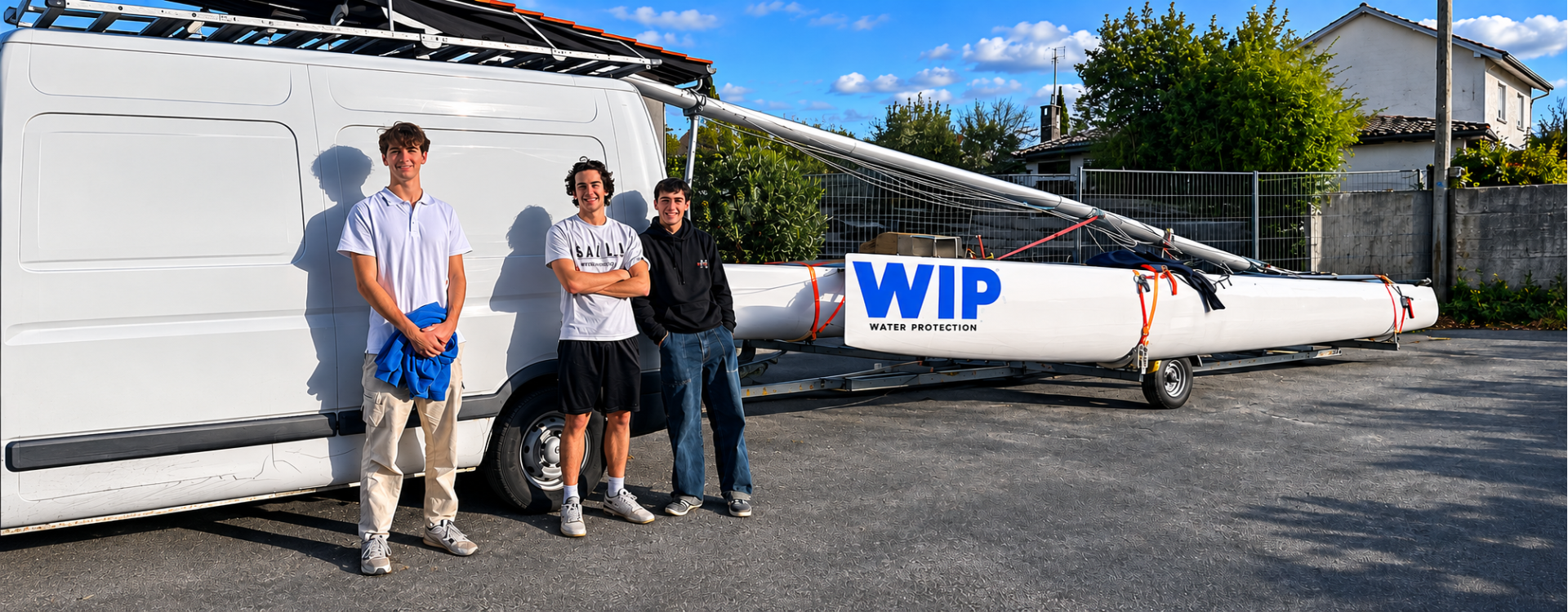
That is the challenge Noé Migraine, Zacharie Boumard and Lucas Imren took on with the DEKOK project: travelling from Gibraltar towards the Black Sea aboard a Mattia F18.
More than 5,000 km on a sports catamaran
The project started on February 5 with an ambitious objective: approximately 5,337 km between Gibraltar and the Black Sea.
The distance alone is impressive. But the boat they chose is what really puts the challenge into perspective.
An F18 is designed for performance sailing. The crew sails directly above the water, exposed to wind, spray, sunshine and changing temperatures. There is no interior space to retreat to after several hours at sea.
The original plan involved several months of largely self-sufficient travelling with a deliberately simple and minimalist approach.
The distance announced when the project was launched between Gibraltar and the Black Sea.
Noé, Zacharie and Lucas, sharing the sailing, decisions, repairs and challenges.
A sports catamaran turned into a genuine travelling platform.
What makes this journey so remarkable?
It is not simply about sailing a long distance.
On a cruising yacht, a crew would normally have a cabin, a dry space, somewhere to sleep and considerably more storage.
On an F18, almost all of that disappears.
The sailors live in direct contact with the elements. Equipment has to be kept to a minimum. Every item carried matters. Every stop means recovering, securing the boat, checking the equipment and preparing for the next stage.
Bad weather, equipment failure, a difficult landing or simply hours spent exposed to cold water and spray can completely change the plan.
That permanent exposure is what turns a long sailing trip into a real adventure.
Starting in winter changes everything
A February departure added another level of difficulty.
The Mediterranean can provide outstanding conditions, but the weather can also change quickly. On a small open catamaran, the crew immediately feels the wind, cold, waves and humidity.
Progress is therefore not only about sailing fast.
It means reading the weather, selecting suitable windows, adapting the route and sometimes knowing when not to leave.
A journey about sailing, but also about people
As the journey develops, distance becomes only one part of the story.
Travelling along the coast on such a simple boat offers a completely different way to discover places that might otherwise remain unseen.
Every landing becomes a new experience.
There are beaches, harbours, towns and landscapes. But there are also the people met along the way, unexpected help, conversations around the boat and the solutions found whenever something does not go according to plan.
A destination, but much more than that
Gibraltar and the Black Sea are two points on a map. What makes DEKOK remarkable is everything between them: the miles sailed, problems solved, landscapes discovered and people encountered along the way.
Learning by doing
Another striking part of the project is the level of experience the three sailors had when they started.
They did not set off as a professional expedition team specialising in long-distance sailing.
The journey therefore became a full-scale learning experience.
They had to learn to sail together, make decisions, anticipate problems, repair equipment, adapt and continue despite fatigue and unexpected situations.
On a boat this simple, there is rarely someone else to solve the problem. When something goes wrong, the crew has to understand it and find a way forward.
Forward Watersports supporting DEKOK
Forward Watersports chose to support this adventure because it is closely connected to our world: dinghy sailing, catamarans and watersports where equipment is genuinely exposed to the elements.
Our support focused on two complementary areas.
- The boat, with Forward Sailing sails.
- The sailors, with personal Forward WIP equipment.
On a journey of several thousand kilometres, equipment is naturally only one part of the equation. Decisions, independence and the crew's ability to adapt remain essential.
Our role was simply to contribute our experience in catamaran sailing, sails and watersports equipment to their project.
Three sailors. One F18. Several thousand kilometres.
The journey does not need to be called a record to understand the scale of the challenge.
Just imagine several months directly above the water, without a cabin, carrying everything you need on a sports catamaran.
The story featured in Le Télégramme
The journey also attracted media attention. French newspaper Le Télégramme looked back at their adventure, the places they discovered and the experience of travelling towards the Black Sea by catamaran.
Read the Le Télégramme article
A different way to experience the sea
DEKOK is a reminder that a major adventure does not necessarily require a large boat.
Three people, one catamaran, a high degree of independence and a sufficiently distant destination can turn a student project into an experience that will probably remain with them for life.
That simplicity is precisely what makes their story so powerful.